Disposable vs Refillable Helium for Balloons: Which Should You Buy?
If you need to fill balloons, there are two practical options: a disposable helium canister that is used once and recycled, or a refillable helium cylinder that can be topped up or exchanged again and again.
Both options do the same job by floating your balloons, but the right choice depends on how many balloons you need to fill and how often you use helium.
This guide compares disposable helium canisters and refillable helium cylinders in terms of cost, convenience and capacity, helping you choose the most suitable option with confidence.

Disposable canister or refillable cylinder?
For one-off parties and occasional use, a disposable helium canister is usually the simplest option. It has a lower upfront cost, is ready to use and can be recycled once empty.
For regular events, business use and higher-volume balloon filling, a refillable helium cylinder is often the better long-term choice. The initial cost may be higher, but it can work out cheaper per balloon over time.
As a simple guide, occasional users are usually best suited to disposable canisters, while regular or business users are likely to benefit more from refillable cylinders.
Disposable helium canisters
A disposable canister is the easiest way to fill a modest number of balloons.
There is nothing to return and no deposit to manage. Once the balloons have been inflated, the empty canister can be recycled.
For a child’s birthday, a small celebration or a one-off display, this is often the most practical choice.
Adams Gas supplies a small disposable helium canister that fills around 10 balloons, with larger disposable options also available within the helium for party balloons range.
If you only fill balloons a few times a year, a disposable helium canister will usually make the most sense.
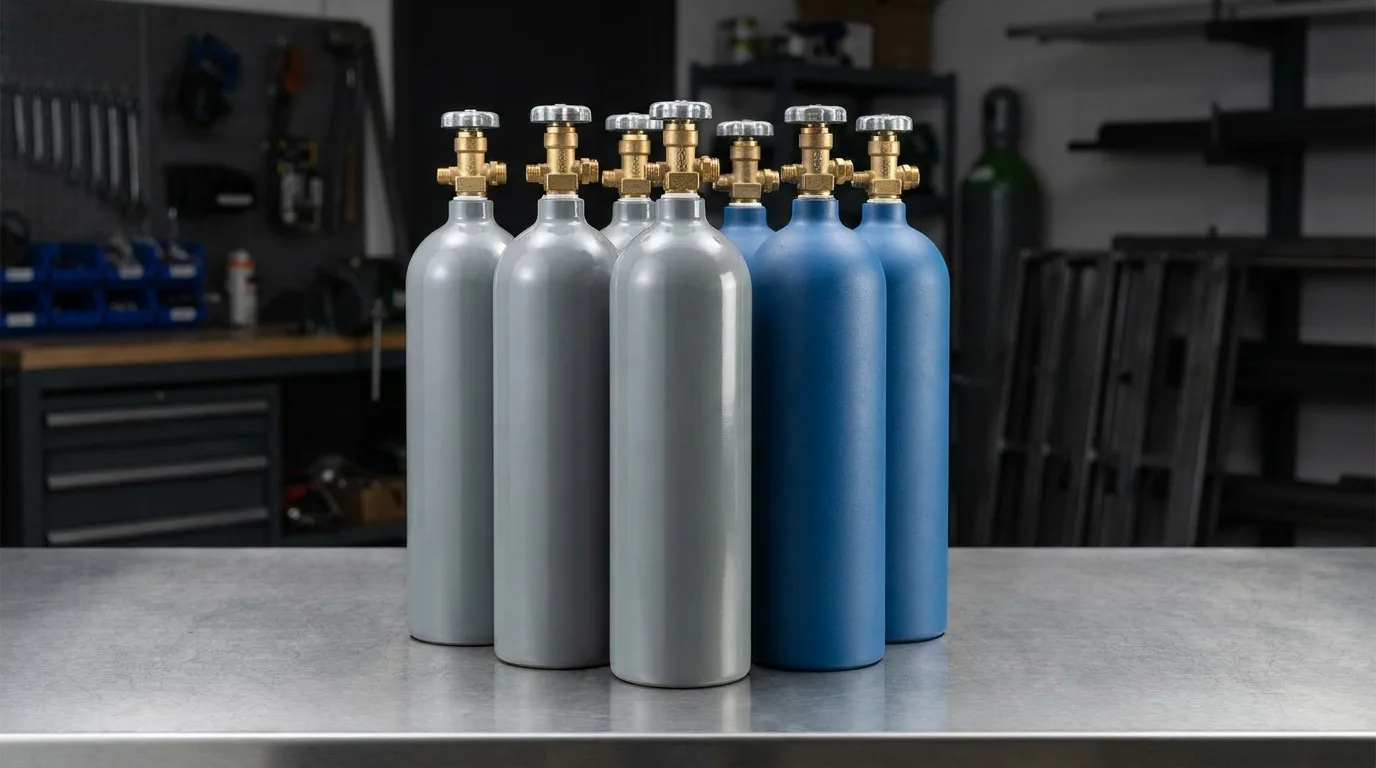
Refillable helium cylinders
If you fill balloons regularly, disposable canisters can quickly become expensive.
Party planners, florists, event venues, decorators and shops are often better served by a refillable helium cylinder.
A refillable cylinder holds far more gas, can reduce the cost per balloon and helps avoid running short partway through an event.
When the cylinder runs low, it can be refilled or exchanged rather than replaced with another single-use canister.
Adams Gas supplies refillable helium bottles in a range of sizes, alongside its wider helium canister range. Many Adams Gas cylinders are also rent-free, meaning there is no annual cylinder rental to worry about and customers only pay for the gas they use.
For businesses filling balloons week after week, this can offer a meaningful saving compared with disposable canisters.
How many balloons will a helium canister fill?
The number of balloons a canister or cylinder will fill depends on the size of the container and the size of the balloons.
Larger balloons use more gas, so the same tank will fill fewer of them.
As a rough guide, the small disposable helium canister from Adams Gas fills around 10 standard latex balloons. Larger disposable canisters and refillable cylinders can fill many more.
For accurate figures, check the capacity listed on each product or contact Adams Gas for a recommendation based on the number and size of balloons required.
Helium safety
Helium is non-flammable and inert, which is why it is used as the standard gas for party balloons instead of hydrogen, which is cheaper but flammable.
However, helium must still be used safely.
Never inhale helium. It displaces oxygen and can cause dizziness or more serious harm.
Canisters and cylinders should be kept upright, stored away from children and kept out of direct heat.
When used correctly, helium is a safe and practical product for balloon inflation.
Buy or refill helium with Adams Gas
Whether you need a single disposable canister or a refillable cylinder for regular use, Adams Gas can help.
Occasional users can choose a disposable helium canister for a simple, recyclable and commitment-free option.
Regular and business users can switch to a refillable helium cylinder, often rent-free, to achieve a better price per balloon.
Adams Gas also offers gas bottle delivery and a network of local stockists for convenient supply.
Events businesses interested in selling helium can also enquire about becoming an Adams Gas stockist.
If you are unsure which option is right for your event, contact the Adams Gas team for advice on the most suitable size.
Frequently asked questions
Is disposable or refillable helium cheaper?
For occasional use, a disposable canister is cheaper upfront and does not involve any ongoing commitment.
For regular or high-volume use, a refillable helium cylinder is usually cheaper per balloon over time, especially with rent-free cylinders where you only pay for the gas.
Party planners, florists and venues will usually save more by choosing refillable helium.
How many balloons does a helium canister fill?
This depends on the canister size and balloon size.
Larger balloons use more gas, so they reduce the number that can be filled from the same canister.
As a guide, the small disposable Adams Gas canister fills around 10 standard balloons, while larger disposables and refillable cylinders fill many more.
Can a helium cylinder be refilled?
Yes. Refillable helium cylinders are designed to be topped up or exchanged when empty rather than thrown away.
This makes them a cost-effective option for anyone filling balloons regularly.
What size helium tank do I need for a party?
For a small party with around 10–30 balloons, a disposable canister is usually enough.
For larger events, repeat events or business use, a refillable cylinder is usually better value and reduces the risk of running out.
If in doubt, provide your balloon count and Adams Gas can recommend a suitable size.
Is helium for balloons safe?
Yes, when used correctly.
Helium is non-flammable and inert, which makes it the standard gas for balloons.
Never inhale helium, keep cylinders upright and store them away from heat and children.
Visit the Adams Gas website for more information on Disposable vs Refillable Helium for Balloons: Which Should You Buy?
ENQUIRY FORM
More News