What is Dewpoint? A Complete Beginner’s Guide
You have probably heard a weather forecaster mention dewpoint and wondered how it is different from humidity.
You may also have seen dewpoint listed on a specification sheet for industrial equipment and not been sure what it means.
This guide starts from the beginning and explains what dewpoint is, why it is used as a measurement and where it is applied.
What is dewpoint?
Dewpoint is the temperature at which air becomes so full of water vapour that it cannot hold any more.
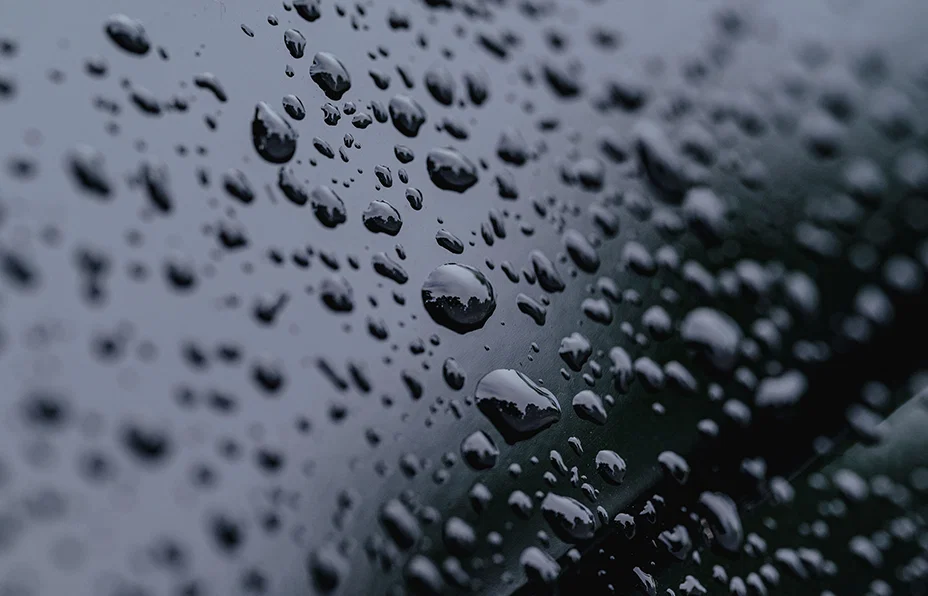
When this happens, the excess moisture starts turning into liquid water, or ice if the temperature is cold enough, on nearby surfaces.
A useful way to think about air is as a sponge for water vapour.
Warm air acts like a large, dry sponge. It can hold a lot of moisture.
As that air cools, the sponge effectively shrinks.
Dewpoint is the temperature at which the sponge has shrunk enough to become completely full and starts releasing water again.
This is why it is called dewpoint.
When air outside cools overnight and reaches this temperature, excess moisture condenses as dew on grass, car windscreens and other cool surfaces.
Why dewpoint is not the same as humidity
Most people are more familiar with relative humidity, shown as a percentage on weather apps.
The key difference is that relative humidity is a percentage, while dewpoint is a temperature.
Relative humidity describes how full the air’s “sponge” is at that moment compared with how much moisture it could hold at the current temperature.
Dewpoint shows the actual amount of moisture in the air, expressed as the temperature where condensation would begin.
This distinction matters because relative humidity changes throughout the day, even if no moisture is added or removed from the air.
It changes simply because temperature changes.
Warm afternoon air can hold more moisture, so the same amount of water vapour appears as a lower relative humidity percentage than it did during a cooler morning.
Dewpoint remains much more stable through the day because it tracks the actual moisture content rather than a ratio that shifts with temperature.
Why dewpoint matters beyond weather
Dewpoint is not just a weather term.
It is also a useful engineering and safety measurement.
Condensation and mould prevention
Condensation forms whenever a surface temperature drops to or below the dewpoint of the surrounding air.
This is why cold drinks “sweat”, windows fog up and poorly insulated walls or cold pipes can develop condensation.
If the surrounding air’s dewpoint is too high compared with the surface temperature, mould can eventually develop.
Industrial gas and process control
Many industrial processes require extremely dry conditions.
These include compressed air systems, natural gas pipelines, semiconductor manufacturing and aerospace components.
Dewpoint is the standard way to specify and measure how dry a gas is, often down to very low, sub-zero temperatures for ultra-dry applications.
Aviation and vehicles
Pilots and drivers pay attention to dewpoint because fog can form when air temperature drops close to the dewpoint.
This makes dewpoint an important factor in visibility and flight planning.
HVAC and building design
Engineers use dewpoint to size dehumidification equipment and design building envelopes that avoid condensation inside walls or on windows.
What about frost point?
Below freezing, at 0°C or 32°F, the same principle applies, but excess moisture forms ice instead of liquid dew.
This sub-zero version is technically called frost point rather than dewpoint.
In everyday conversation, people often use “dewpoint” for both.
However, in precise scientific and industrial contexts, the distinction matters.
Ice and liquid water have slightly different physical properties at the same temperature, which affects how the numbers are calculated.
How is dewpoint measured?
Dewpoint is more than a weather measurement.
It is also a practical engineering and safety measurement, and there are several ways to measure it.
Chilled mirror hygrometers
Chilled mirror hygrometers cool a small mirror until condensation just starts to form on it.
An optical sensor then detects the exact temperature at which this happens.
This is considered one of the most accurate methods available.
Capacitive-based sensors
Capacitive-based sensors measure water vapour pressure through changes in an electrical property of a sensing material.
They are commonly used in industrial instrumentation.
Psychrometric calculation
Psychrometric calculation derives dewpoint mathematically from an air temperature and relative humidity reading using standard formulas.
This is how most weather apps produce the dewpoint number they display, as they rarely measure it directly.
The takeaway
Dewpoint tells you, in one number, how much moisture is actually in the air.
It is not a percentage and does not depend on the current temperature.
Instead, it gives a direct answer to how humid the air actually feels and when condensation will start forming.
That combination of simplicity and stability is why dewpoint is used everywhere from local weather forecasts to precision industrial gas measurement.
Contact Shaw Moisture Meters
For more information on the applications of dewpoint measurement in gas and compressed air, visit the Shaw Moisture Meters applications page.
For measurement enquiries, contact the Shaw team.
Visit the Shaw Moisture Meters (UK) Ltd website for more information on What is Dewpoint? A Complete Beginner’s Guide
ENQUIRY FORM