The importance of dewpoint measurement in glove boxes
The importance of dewpoint measurement in glove boxes and controlled environments
Many manufacturing processes and laboratory procedures require a modified atmosphere.
In practice, this means teams maintain a controlled environment with conditions that differ from normal ambient air.
Many applications depend on that control because oxygen and water vapour can damage sensitive materials or disrupt critical processes.
In some cases, manufacturers use a sealed enclosure to protect the product. In others, they use it to protect operators from hazardous materials, vapours or dust.
When operators need to handle, assemble or modify materials under controlled conditions, glove boxes offer a practical solution.
What is a glove box?
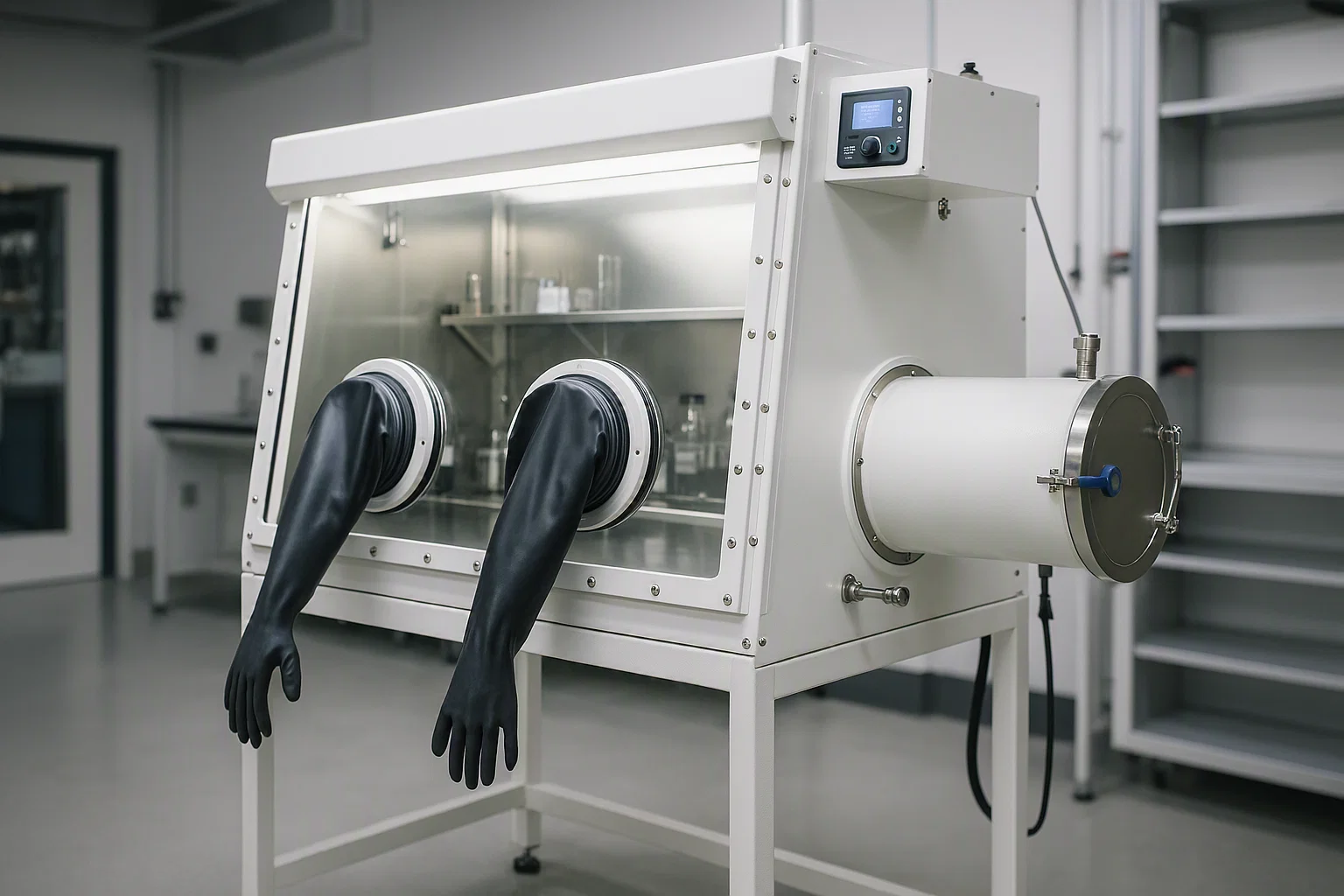
A glove box is a sealed enclosure that allows operators to handle materials without exposing them to ambient air.
Glove boxes vary in size and shape, but they all include glove ports fitted with long cuffs that seal tightly around openings in the front panel.
These gloves allow operators to work inside the enclosure while preserving the internal atmosphere.
This design makes glove boxes especially useful when a process depends on dry or oxygen-free conditions.
Manufacturers often use glove boxes to assemble and encapsulate semiconductor devices and integrated circuits, where a dry atmosphere helps them achieve a reliable seal.
Where inert atmosphere glove boxes are used
Manufacturers and laboratories use inert atmosphere glove boxes in a wide range of environments where ambient air would affect process performance, product quality or safety.
Typical applications include air- and moisture-sensitive chemical synthesis, including organometallics and battery materials; pharmaceutical powder handling, sterile packaging and biochemical preparation; semiconductor and thin-film device fabrication, including OLEDs and perovskites; and the storage or handling of pyrophoric, radioactive or toxic materials.
In each of these environments, the glove box must do more than isolate the product from ambient air.
It must also maintain a stable, dry and oxygen-free atmosphere throughout the process, even while operators transfer, handle or modify materials.
Why trace moisture measurement matters in glove boxes
In inert atmosphere glove boxes, moisture is one of the most important contaminants to control.
Even at very low concentrations, trace moisture can interfere with sensitive processes and damage reactive materials.
In some applications, moisture at only a few parts per million can trigger oxidation, hydrolysis, decomposition, reduced yields, unintended reactions or failed synthesis.
This issue matters most in environments such as lithium battery production, air- and moisture-sensitive chemical synthesis, pharmaceutical handling and semiconductor fabrication.
In these settings, ultra-low moisture levels support product purity, experiment repeatability, operator safety and equipment longevity.
The problem with maintaining ultra-dry conditions
The challenge is not only to achieve a dry atmosphere, but also to maintain it throughout the process.
Moisture can enter the glove box through leaks at glove ports, seals, gaskets or viewports.
It can also enter through the antechamber during material transfer, or come from items that operators place inside before fully drying them.
Porous materials, unbaked glassware, solvent residues and glove permeation can also introduce moisture.
When moisture enters the system, it can contaminate sensitive materials, corrode internal components, increase the load on purification columns, reduce purification efficiency and create safety risks when operators handle pyrophoric substances.
That is why trace moisture measurement plays such an important role in glove box operation.
Moisture analysers confirm when the enclosure is dry enough for work to begin, and they continue monitoring conditions throughout the process.
If moisture levels rise, operators receive an early warning of a leak, a loss of purge gas flow or moisture introduced during transfer or handling.
Among the most widely used technologies for this purpose are aluminium oxide capacitance moisture sensors.
These sensors offer fast response, high sensitivity and low detection limits.
They detect changes in electrical properties as water molecules diffuse into an oxide layer, allowing them to measure moisture at very low levels, including sub-ppm concentrations.
This capability makes them well suited to real-time leak detection, glove box atmosphere verification and ongoing control of ultra-dry inert environments.
Dewpoint measurement solutions
Trace moisture measurement helps glove boxes operate safely, efficiently and reliably.
Even a few ppm of moisture can damage sensitive materials, reduce yields, overload purification systems and compromise process outcomes.
By combining effective moisture measurement, robust purification methods and sound operating procedures, laboratories and production environments can maintain the ultra-dry conditions that high-performance glove box operation demands.
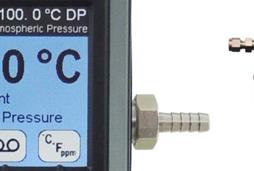
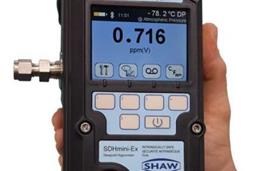
The Shaw SDT-Ex dewpoint transmitter with AutoCal functionality is suitable for use in hazardous areas and industrial applications.
The Shaw Acu range includes dewpoint transmitters, plug-in displays, inline hygrometers, single-channel inline hygrometers, 2-wire and 4-20 mA loop-powered options, with AutoCal functionality for trace moisture measurement of process gases and dry compressed air.
Applicable standards
Several recognised standards and guidelines are relevant to glove box design, leak tightness and atmosphere control.
ISO 10648-2 covers the classification of containment enclosures according to leak tightness and the associated checking methods.
AGS-G001-2007, the Guideline for Gloveboxes, addresses glove box technology from design through to installation, operation and maintenance.
AGS-G015-2015, the Standard of Practice for Glovebox Inert Gas Recirculating Purification Systems, sets out requirements for the design, installation, testing, operation and maintenance of inert gas recirculating purification systems.
For more information on dewpoint measurement in glove boxes and other controlled environments, contact the Shaw team.
Visit the Shaw Moisture Meters (UK) Ltd website for more information on The importance of dewpoint measurement in glove boxes
ENQUIRY FORM