The Critical Role of Dewpoint Measurement in LNG and LPG
The importance of dewpoint measurement in LNG and LPG bulk carriers
What are LNG and LPG?
Liquefied Natural Gas (LNG) and Liquefied Petroleum Gas (LPG) are transported worldwide in bulk as cryogenic liquids or under pressure. Liquefaction makes long-distance transport practical and economical because the liquid occupies roughly 600 times less volume than the gas.
LNG is natural gas cooled to around −162 °C at near-atmospheric pressure. It is carried in cryogenic tanks on specialised ships or insulated road tankers, with strict temperature control and careful management of boil-off gas throughout the voyage.
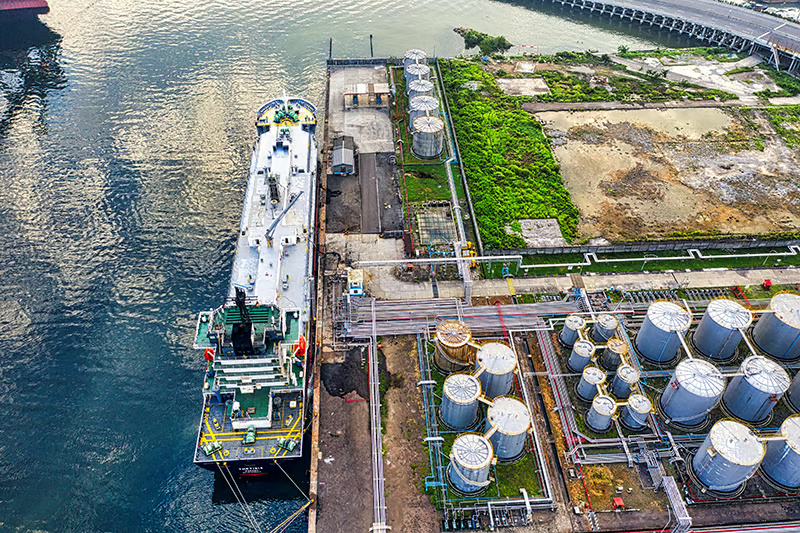
LPG, typically propane and butane, is moved under moderate pressure or in refrigerated conditions. Depending on the vessel, LPG may be stored in pressurised tanks, semi-refrigerated ships or fully refrigerated carriers. For context, propane boils at −42 °C and butane at −0.6 °C, so temperature control and handling are critical to avoid condensation and freezing.
Preparing cargo tanks: why dryness matters
Before loading LNG or LPG, operators follow a defined sequence to remove moisture and ensure safe, efficient loading:
Drying: Residual water is removed to prevent ice formation during cool-down.
Inerting: Oxygen is displaced with an inert gas, usually nitrogen, to create a stable, non-explosive atmosphere.
Gassing-up: The inert gas is then replaced with cargo vapour to prepare the tanks for liquefied gas.
Cool-down: Tank temperature is gradually reduced to match cargo carriage conditions, enabling a smooth, controlled transfer.
Every stage depends on tight moisture control and accurate dewpoint measurement. Even trace water will freeze at cryogenic temperatures, risking blockages, damaging critical equipment and threatening personnel safety. Continuous monitoring at ppm levels is therefore essential.
For guidance on dewpoint measurement in LNG and LPG applications, contact us.
Reference standards
ISO 23306:2020 – LNG as marine fuel specification
API MPMS – Manual of Petroleum Measurement Standards
ASTM D1142 – Water vapour in natural gas
EASEE-gas Common Business Practice 2005-001/01
Visit the Shaw Moisture Meters (UK) Ltd website for more information on The Critical Role of Dewpoint Measurement in LNG and LPG
ENQUIRY FORM