Ethylene Feed Moisture Measurement
Why the lead-lag dryer midpoint matters
At a polyethylene plant, the obvious place to check feed moisture is at the reactor inlet.
The problem with that measurement is timing.
If water is detected there, it has already reached the reactor.
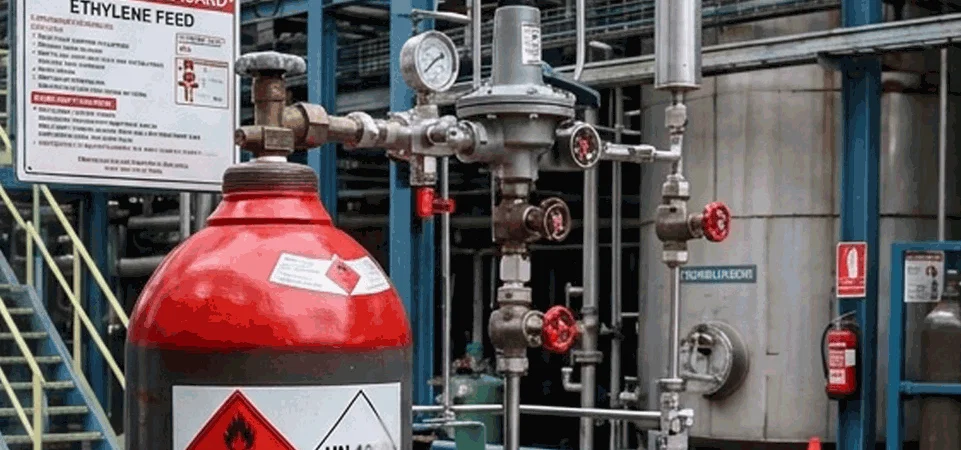
By that stage, catalyst activity may already be falling, co-catalyst may be being consumed and the resin produced may be starting to move off grade.
A measurement point one step further upstream provides something the reactor inlet cannot: time to respond.
Why does the reactor inlet measurement come too late?
Moisture measurement at the reactor inlet is a valuable final check, but it is not an early-warning measurement.
If the reading rises at that point, water has already passed through the feed treating system and reached the reactor.
In polyethylene production, even trace moisture can affect catalyst performance, consume co-catalyst and contribute to changes in polymer properties.
The aim is therefore not simply to detect water at the reactor.
It is to identify it before it gets there.
How lead-lag dryers protect the reactor
Polymer-grade ethylene normally passes through feed treaters before reaching the reactor.
These beds remove oxygen, carbon monoxide, water and other catalyst poisons.
Water is commonly removed using 3A molecular sieve dryers, often installed as a lead-lag pair.
The lead bed carries most of the drying duty.
The lag bed provides a safety margin by capturing moisture that breaks through the lead bed before it reaches the reactor.
A molecular sieve bed retains water until its adsorption front approaches the outlet.
From this point, water can begin passing through the bed.
The problem is that normal process measurements may not show this happening.
Without continuous moisture measurement, the lead bed can begin to break through with little warning while the lag bed starts using its own capacity.
Why the midpoint gives the earliest warning
A dewpoint transmitter installed between the lead and lag beds detects breakthrough as soon as it begins.
At this stage, the lag bed is still protecting the reactor.
A rising midpoint reading is therefore a warning rather than an upset.
Operators have time to switch beds, take the lead bed offline and begin regeneration before water reaches the reactor.
The reactor does not see the moisture, helping protect catalyst activity, reaction rate and resin grade.
What could otherwise have become a reactor upset becomes a planned bed change.
This is why the lead-lag midpoint is the primary continuous measurement point in an ethylene feed train.
How to measure moisture at the midpoint
Use a continuous, intrinsically safe dewpoint transmitter.
Ethylene is a gas group IIB hazard and analyser locations are commonly classified as Zone 1 or Zone 2.
An intrinsically safe transmitter can send a 4–20 mA signal to the DCS, where the reading can be trended, alarmed and used to prompt a bed switch.
The measurement should be taken from a representative, conditioned sample of ethylene vapour.
The sample system should be designed to minimise condensation, adsorption and delay.
Watch the trend, not just the value
Polymer-grade ethylene is commonly controlled at low ppm(v) moisture levels, with many plants using an alarm or control target below 1 ppm(v).
Molecular sieve dryers can condition the gas to well below this level.
At atmospheric pressure, 1 ppm(v) of water corresponds to a frost point of around −76 °C.
Near this level, the ±2 °C dewpoint accuracy of an aluminium oxide sensor spans approximately 0.75 to 1.4 ppm(v).
This does not make the measurement unreliable.
It means alarm limits should be set with the measurement band in mind.
A steady upward trend at the midpoint is often more useful than a single reading because it can indicate the early stages of dryer breakthrough.
Record sample pressure
Pressure affects the dewpoint for a given water content.
At 30 bar, the same 1 ppm(v) reads at around −52 °C.
Always record sample pressure alongside the dewpoint.
Without pressure information, it can be difficult to distinguish a genuine change in moisture content from a change in sample pressure.
Heat and control the pressure reduction
Ethylene cools as it expands.
Its critical temperature is only 9.2 °C, so an unheated regulator on a high-pressure line can chill the sample and cause partial condensation.
Keep sample lines short and use stainless steel.
Sample in the vapour phase, apply controlled heating where required and route the vent to flare or another safe location.
Allow the sample system to stabilise
Below 1 ppm(v), water held on tubing walls, fittings and other wetted surfaces can continue to desorb for some time after a line has been opened or disturbed.
Purge a new or disturbed sample line with process gas and wait for a stable trend before relying on the reading.
A stable baseline is essential when measuring trace moisture.
Use midpoint data to optimise dryer cycles
Many plants switch dryer beds on a fixed timer.
This approach is safe, but it can also be conservative.
Beds may be regenerated before their full available capacity has been used.
A midpoint moisture trend shows how much capacity each cycle actually uses and how much remains unused.
With this information, regeneration intervals can be optimised rather than estimated.
This can reduce unnecessary regenerations, lower energy use and make better use of dryer capacity without compromising reactor protection.
Build a complete ethylene moisture strategy
The lead-lag midpoint is the key measurement point, but it works best as part of a broader moisture monitoring strategy.
Battery limit
Measure moisture at the battery limit to check incoming ethylene against the supply specification before it loads the treaters.
Reactor feed header
Measure moisture at the reactor feed header as a final check that nothing downstream of the lag bed is introducing water.
After regeneration or maintenance
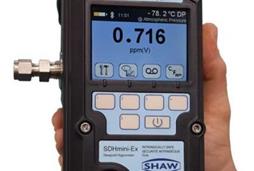
Use an intrinsically safe portable hygrometer to spot-check a bed after regeneration or maintenance and confirm that it is dry before returning it to service.
Learn more about dewpoint measurement in ethylene feed gas
Our application note, Dewpoint Measurement in Ethylene Feed Gas, covers all four measurement points, the relevant standards and our recommended instruments.
Shaw Moisture Meters has designed and manufactured dewpoint instruments for more than seventy years.
Tell us about your requirements and we can help you choose the right instrument for your ethylene feed gas application.
Visit the Shaw Moisture Meters (UK) Ltd website for more information on Ethylene Feed Moisture Measurement
ENQUIRY FORM