Dry Room Airlock Moisture: How to Monitor it
Dry room airlock moisture: how to monitor it
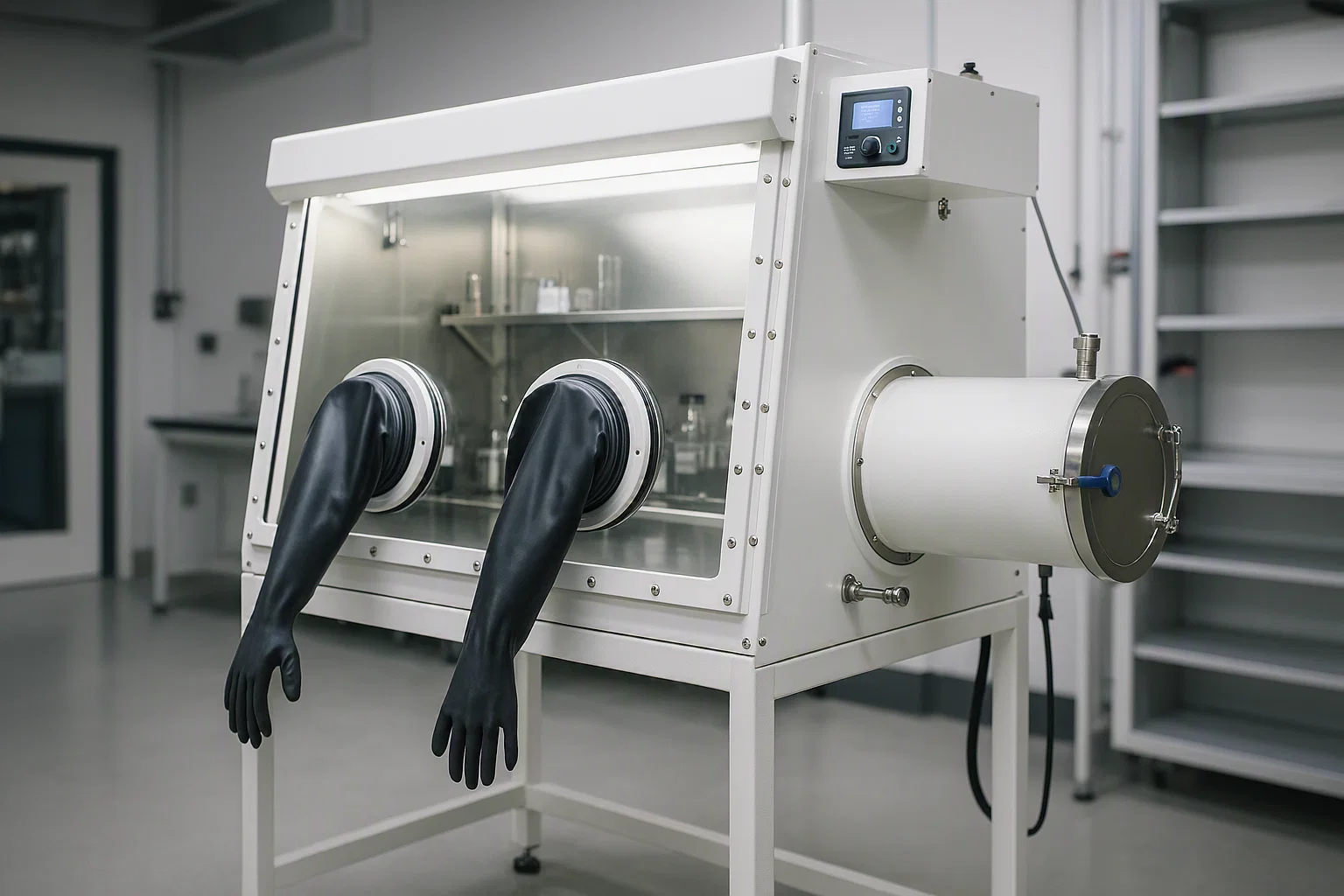
Dry room airlock moisture can be easy to overlook.
A dry room may be meeting its target dewpoint at the dehumidifier outlet and at selected points within each process zone, yet moisture can still enter through an airlock during door operation or material transfer.

People, door cycles and incoming materials can all introduce significant moisture loads.
The effect will depend on the room design, pressure cascade, purge sequence, occupancy and operating procedures.
For that reason, airlocks need their own monitoring strategy.
Why dry room airlock moisture matters
Lithium-ion battery manufacturing often requires very low moisture levels to protect moisture-sensitive materials and processes.
Under these conditions, even a local problem at an airlock can affect the neighbouring process zone if the additional moisture load exceeds the room’s ability to remove it.
Different zones may also have different dewpoint targets depending on the process, materials and chemistry involved.
A healthy reading at the dehumidifier outlet cannot confirm that every zone and every airlock is maintaining the required condition.
Monitoring at representative locations can reveal local variations that a supply-air measurement may miss.
What can go wrong at an airlock?
Two common problems are degraded or leaking door seals and an underperforming purge cycle.
Either can increase moisture ingress into the adjacent zone.
If the additional moisture load is not removed effectively, the zone may begin to drift outside specification.
Seal-related problems can include worn or damaged seals, incomplete door closure and poor seal compression.
Purge-related issues may include inadequate purge time, insufficient airflow and unstable pressure differentials.
Other possible sources of moisture include frequent door opening, poorly controlled material transfer and moisture released from incoming materials or packaging.
The effect of each source will depend on the airlock design, airflow direction and relationship between neighbouring zones.
How to monitor dry room airlock moisture
Use spot checks during commissioning and maintenance
Airlocks between zones should be included in planned dewpoint surveys.
Spot checks can reveal local problems that may be hidden by an otherwise healthy reading elsewhere in the zone.
Measurements can be particularly useful after door opening events, during or immediately after material transfer, when verifying purge cycles, following maintenance or changes to door seals, or when a nearby zone shows an unexplained moisture excursion.
For reliable comparisons, allow the instrument and sample system to stabilise before recording the result.
Install a dedicated fixed transmitter
Some facilities install a fixed dewpoint transmitter at a representative location in or near an airlock.
Continuous monitoring can help identify moisture excursions early and show how airlock operation relates to conditions in the adjacent zone.
Sensor position is important.
The transmitter should be located where it can measure the relevant air conditions.
Avoid positions that are directly affected by local draughts, exhaust paths or short-lived door-opening events unless those conditions are specifically what you want to measure.
Use a portable hygrometer for investigation
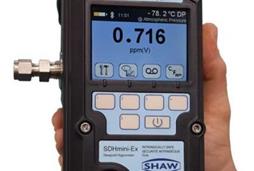
A portable hygrometer with a suitable response time and rapid dry-down can help engineers survey multiple zones and investigate suspected moisture problems.
It can also provide an independent check of fixed transmitters.
However, the measurement method, sampling arrangement, pressure and stabilisation time should be controlled when comparing readings.
Sample lines should be kept short and leak-tight because, at very low dewpoints, even small amounts of outside air entering the system can distort the result.
Portable measurements can help narrow an excursion down to a particular airlock, door, seal or process step instead of treating an entire area as the source of the problem.
What an airlock reading tells you
A zone reading can show that the room has moved away from its required condition.
An airlock reading can help localise a moisture excursion and show where further investigation may be needed.
However, an airlock measurement on its own does not prove exactly where the moisture entered.
It should be interpreted alongside door opening and cycle records, purge performance, pressure differential data, airflow direction, nearby zone measurements, maintenance records and material transfer activity.
Pressure differential data does not measure moisture directly, but it can show whether the airlock and adjoining zones are behaving as designed.
Using these measurements together gives a more reliable picture of how moisture is moving through the dry room system.
A practical monitoring strategy for dry room airlock moisture
A suitable monitoring strategy may combine continuous dewpoint measurement at the dehumidifier outlet with fixed transmitters at representative points in each process zone.
Additional monitoring can also be used at selected airlocks and material transfer points.
Portable surveys can support commissioning, troubleshooting and maintenance, while regular checks of door seals, purge performance and pressure cascades can help identify developing problems.
Clearly defined alarm limits and response procedures should also form part of the monitoring approach.
The exact arrangement should reflect the room layout, process sensitivity, airflow pattern and required dewpoint specification.
Why airlock monitoring completes the picture
Measuring dewpoint at the dehumidifier outlet confirms the condition of the supply air.
It does not prove that every airlock and process zone is maintaining the required moisture level.
Monitoring airlocks can help identify local moisture excursions before they affect a wider area.
Used alongside zone measurements, portable surveys and checks of door and purge performance, it provides a more representative picture of dry room conditions.
Our application note, Dewpoint Measurement in Lithium-Ion Battery Manufacture, covers moisture mechanisms and measurement locations in more detail.
For more information on why one supply reading may not be enough, see Lithium-Ion Dry Room Dewpoint.
If you need help choosing instruments for your dry room, get in touch with our team.
Visit the Shaw Moisture Meters (UK) Ltd website for more information on Dry Room Airlock Moisture: How to Monitor it
ENQUIRY FORM