Battery Dry Room Dewpoint Monitoring
Using the SHAW AcuDew dewpoint transmitter
In lithium-ion cell production, battery dry room dewpoint is a key parameter that can influence yield and battery quality.
An unnoticed moisture excursion can contribute to gassing, capacity loss or reduced cell life.
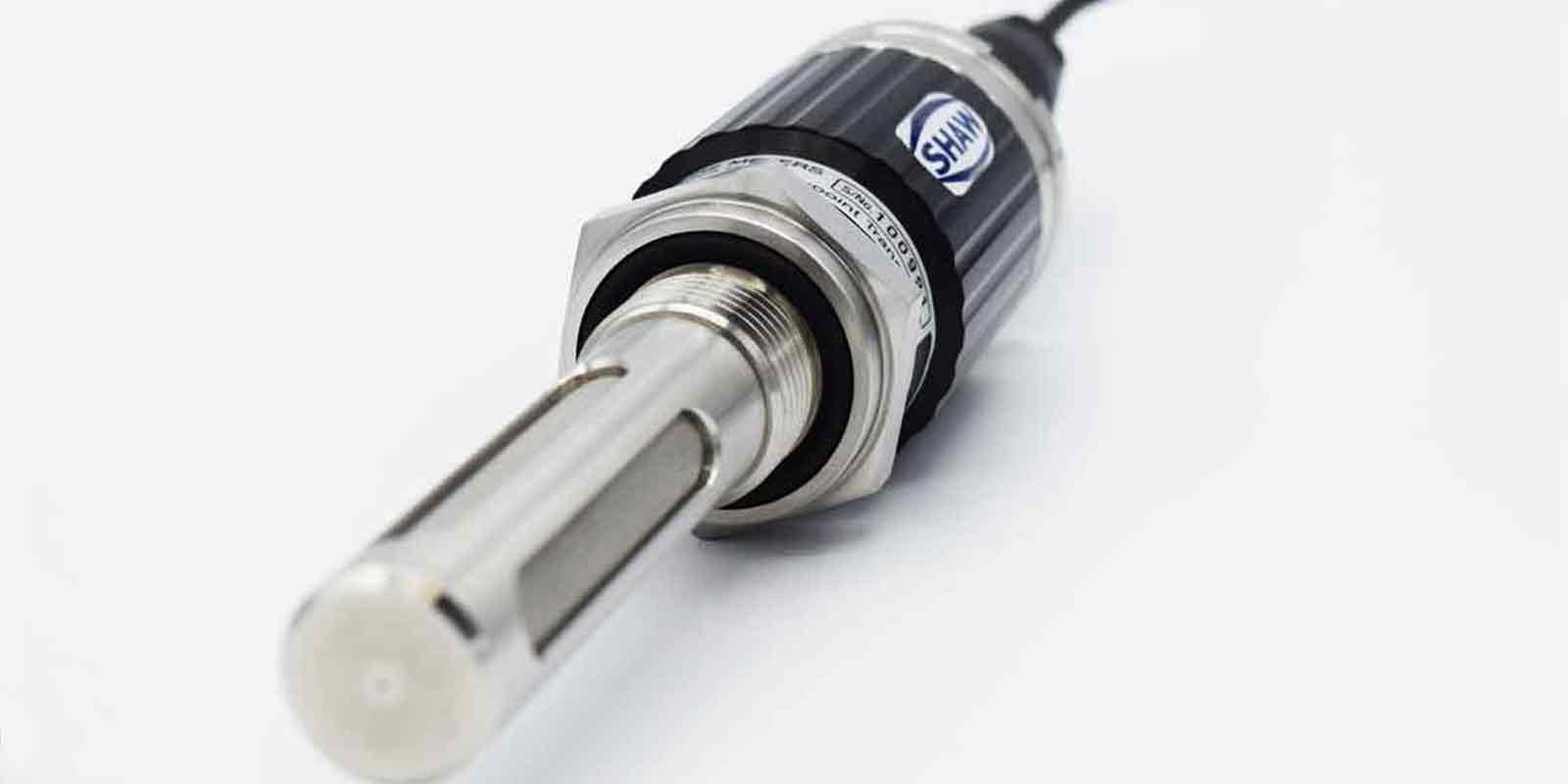
The SHAW AcuDew dewpoint transmitter makes moisture visible continuously wherever it matters, including dry room supply air, desiccant dryer outlets, glove boxes and the dry gases that feed them.
This compact, loop-powered transmitter reports dewpoint or moisture content in the engineering units already used by your process.
Why battery dry room dewpoint matters
The electrolyte salt used in most lithium-ion cells, lithium hexafluorophosphate (LiPF₆), reacts with water to form hydrogen fluoride.
This can attack electrode materials and cell components, which is why electrolyte filling and cell assembly need to take place in very dry air.
Typical cell assembly zones are maintained at around −30 °C to −45 °C dewpoint, while more moisture-sensitive processes may require even drier conditions.
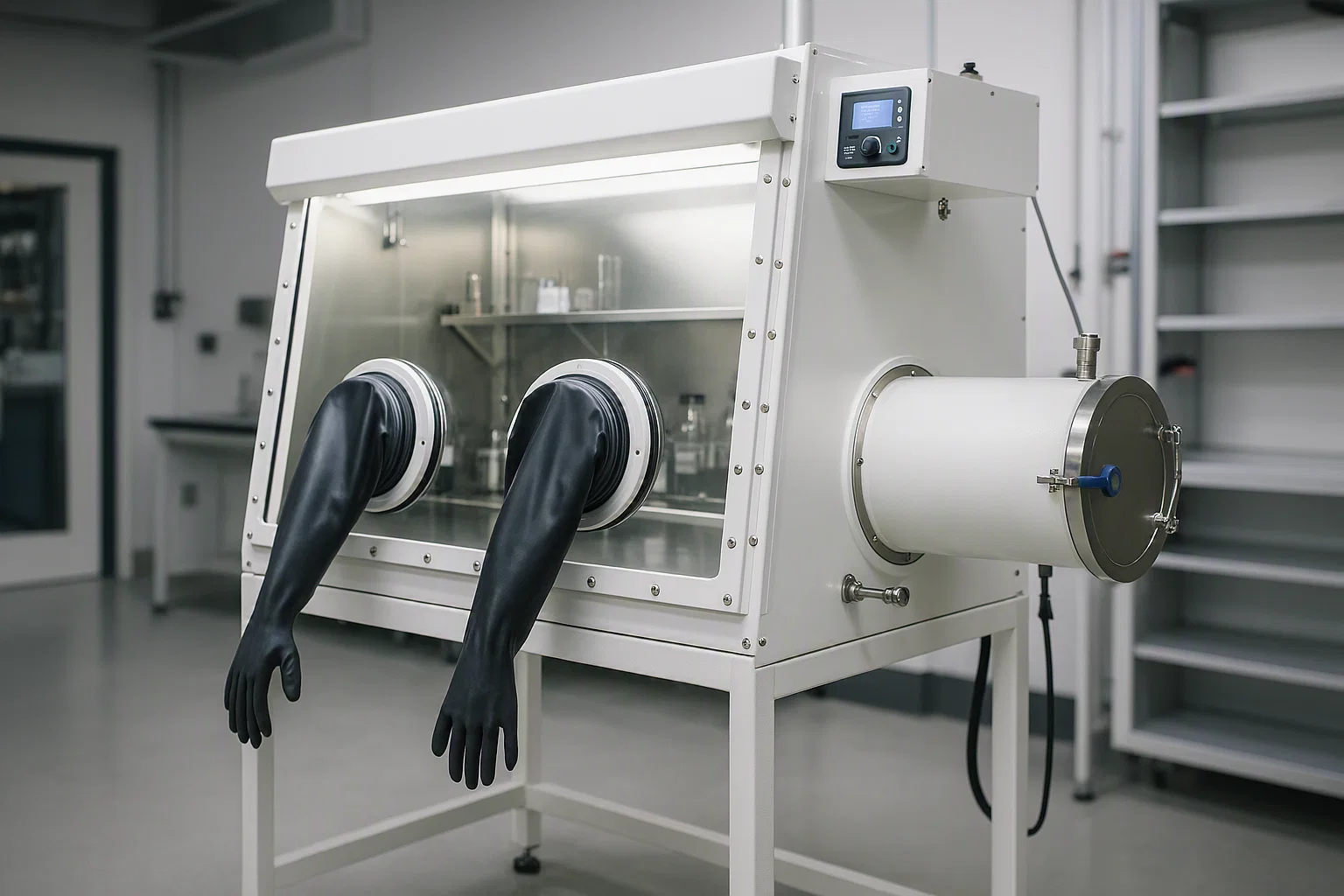
Glove box processes can operate at around −65 °C dewpoint, equivalent to approximately 3 ppm(V).
People and processes also add moisture to the environment, so air is continuously circulated through desiccant dryers.
A dryer fault can allow dewpoint to rise quickly, making continuous monitoring important.
AcuDew covers this range within one transmitter family, with a fast dry-to-wet response that helps identify rising moisture levels quickly.
Accurate dewpoint measurement across a wide range
AcuDew uses an ultra-high capacitance aluminium oxide sensor, giving a single transmitter family the ability to cover applications ranging from general compressed air to very dry process gases.
The measurement range extends from −120 °C to +20 °C dewpoint, or −184 °F to +68 °F, with sensor ranges selected to suit the application.
Accuracy is ±2 °C dewpoint, with NPL-traceable calibration from −90 °C to +20 °C.
Repeatability is better than ±0.3 °C dewpoint, supporting reliable trend monitoring and alarm settings.
The fast response also helps identify moisture excursions promptly.
Readings in the units your process uses
AcuDew can output °C or °F dewpoint, ppm(V), ppb(V), g/m³ or lb/MMSCF.
This allows compressed air teams to work in dewpoint, gas suppliers in ppm or ppb and natural gas operators in lb/MMSCF without needing to convert readings manually.
Easy integration with your control system
AcuDew uses a 4–20 mA, two-wire, loop-powered connection, allowing a single cable to carry both power and signal over distances of up to 1,000 metres.
The AcuDew-M version also supports Modbus RTU over RS485, allowing dewpoint data to be sent directly to a PLC or SCADA system alongside the 4–20 mA output.
Fault signalling is designed to distinguish between measurement faults and genuine dry readings.
Open circuit or under-range conditions drive the output to 20.5 mA, while short circuit or over-range conditions drive it to 20.75 mA.
The transmitter supports pressures from 0.01 to 350 barA, allowing direct pipeline installation or use within a sample system.
Compatible SHAW accessories include AcuLoop, AcuVu and AcuTrak displays, the SU4 sample conditioning unit, the SWS sample system and a range of sensor holders.
Built for long-term, unattended operation
AcuDew is designed for long-term industrial use.
It features 316 stainless-steel wetted parts, an aluminium transmitter body and a 50 µm sintered stainless-steel sensor filter.
With the M12 five-pin connector fitted, the transmitter is rated to IP66 / NEMA 4X.
The sensor is isolated from the transmitter body and supported by microprocessor self-diagnostics.
SHAW AutoCal allows field calibration and span checks between laboratory calibrations.
The transmitter is supplied calibrated with an NPL-traceable certificate, a 12-month calibration warranty and a 24-month mechanical warranty.
It is also compact, weighing 215 g including the connector, with a ¾-inch UNF process connection.
Applications and industries
Lithium-ion battery manufacturing
AcuDew can be used to monitor battery dry room dewpoint at supply and return air points, desiccant dryer outlets, glove boxes, electrolyte filling areas and the nitrogen or argon supplies used during cell assembly.
Compressed air
It can monitor dryer outlets, distribution networks and points of use, helping identify a failing desiccant or refrigerant dryer before excess moisture reaches tools or products.
Industrial and speciality gases
AcuDew can verify the dryness of nitrogen, argon, CO₂ and other gases at filling, storage and point of use, including at trace moisture levels.
Natural gas and fuel gas
Moisture can be reported directly in lb/MMSCF or g/m³ to help check gas against pipeline and contractual limits.
Plastics processing
AcuDew can be used to confirm that resin dryers are supplying sufficiently dry air and help protect moulded parts from moisture-related defects.
Food, beverage and pharmaceutical
The transmitter can monitor compressed air used in applications where it comes into contact with products or packaging.
Electronics manufacturing
It can also track moisture in dry inert gases used for purging and processing.
Choose the right AcuDew for your application
AcuDew is available with a range of sensor calibrations, from −65 °C to +20 °C for general compressed air applications through to −120 °C to −20 °C, equivalent to 0.1 ppb to 1,000 ppm(V), for trace moisture measurement in dry gases.
If you are unsure which range, output unit or accessory best suits your process, the SHAW team can help you choose the most suitable configuration.
Visit the Shaw Moisture Meters (UK) Ltd website for more information on Battery Dry Room Dewpoint Monitoring
ENQUIRY FORM